1 min read
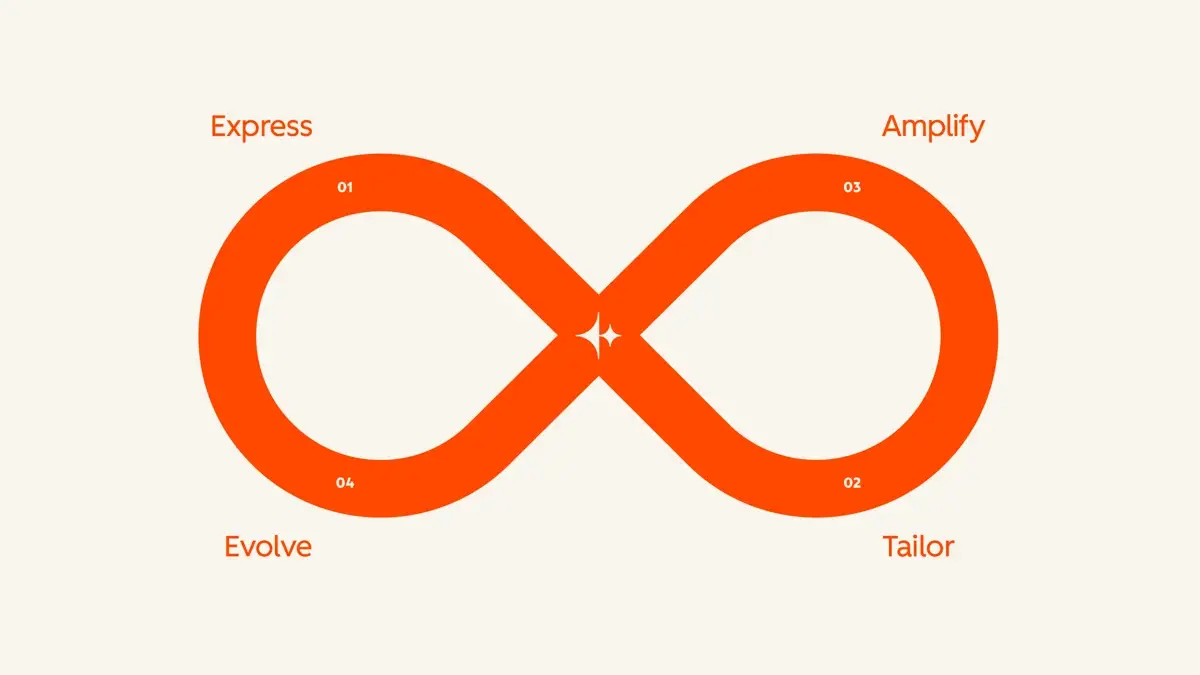
The Loop: Why HubSpot Is Moving Beyond the Funnel
For years, we've all been taught the same story: attract, nurture, convert, close. I myself have followed it for years to help clients augment their...
3 min read
Jasper Meurs
April 8, 2026
For years, CRM conversations were about visibility.
Who’s in the pipeline? What’s the forecast? Which campaign generated this lead?
That was enough when growth followed a relatively predictable path. But buying behavior has changed and AI has greatly accelerated expectations. This means simply storing data inside a CRM isn't giving you the competitive advantage it used to, combining it with a deep understanding of customer context is what's paramount to success.
This is where a HubSpot Customer Context CRM strategy becomes more than a technical setup. It becomes a growth system.
A HubSpot Customer Context CRM isn’t just a database of contacts and deals, it's the unified, 360-degree view of a customer's history, preferences, and interactions spanning marketing, sales, and service data.
Customer context means you can clearly see:
When implemented correctly, HubSpot guides you through the process where all this context lives across your CRM: contacts, companies, deals, tickets, activities, etc. all tied together intentionally. Without that structure, you don’t have context, you have scattered records.
As we all know by now, AI is convenient but it's is only as good as the data it learns from. Today’s tools can summarize calls, draft emails, predict close likelihood, personalize outreach, and automate reporting. But none of that intelligence is necessarily original, it’s pattern recognition based on the data inside your CRM.
If your HubSpot portal contains:
AI won’t fit it, or judge you; it’ll just confidently double down on the chaos. It will amplify it. A well-structured HubSpot Customer Context CRM, on the other hand, allows AI to operate on clean signals instead of noise. Emails reference real prior conversations. Forecasts reflect real deal progression. Automation reacts to actual buying behavior. The competitive advantage isn’t AI, it’s the context behind it.
Many CRMs track deals but few CRM's unify marketing, sales, and service data in a way that creates a continuous narrative. HubSpot was built around shared objects and lifecycle alignment so when your system is set up and used properly this pays back in growth and opportunity for your organization. How you may ask?
This is what transforms HubSpot from a tracking tool into a Customer Context CRM. But that transformation does not happen automatically, it requires intentional design.
Most scaling Saas organizations don’t lack tools or motivation, they lack cohesion and organization. I've seen it before time and time again, marketing launches campaigns inside HubSpot, sales adapts deal stages informally, and customer success tracks onboarding elsewhere. HubSpot wasn't quite their ideal place to log the information they needed, so system creep happens and now data is kept in 10 different places. Sure the information is there but realistically it’s playing hide and seek.
Over time, the data technically exists, but the narrative breaks down. Commitments feel questionable. Forecasting feels unstable. Sales and marketing alignment becomes political. You get the picture, it's not great
The CRM contains information, but it does not provide clarity. A true HubSpot Customer Context CRM eliminates that fragmentation by enforcing consistent lifecycle definitions, structured pipelines, required qualification data, and clear object associations. It replaces assumptions with shared visibility.
Revenue predictability usually isn't a lead quantity issue, but suffers from lack of customer context. When you understand which stakeholders are engaged, which deals meet strict qualification criteria, and which opportunities show real buying signals, forecasting shifts from optimistic to analytical. Instead of asking why you missed your number, you begin identifying risk earlier. Forecasting off inconsistent data is like checking your bank account after guessing your expenses. Technically possible; emotionally risky.
Open a few random deals inside HubSpot and ask:
Can you clearly trace the origin of the opportunity?
Are all relevant stakeholders associated?
Do lifecycle stages reflect defined criteria?
Is engagement history complete and visible?
Does the close date align with a real next step?
If those answers vary significantly between deals, your CRM is operating as a storage tool rather than a context engine. And in an AI-driven environment, that gap becomes expensive.
The organizations that scale efficiently over the next five years will not be the ones experimenting with the most AI features. They will be the ones who built a strong HubSpot Customer Context CRM foundation first, and then layered AI on top of it. Customer context is not a feature. It is a strategic decision about how you structure your growth engine to keep that competitive advantage. And the earlier you treat it that way, the stronger your advantage becomes.
If you’re using HubSpot but suspect you’re only leveraging a fraction of its potential, the first step is not adding new tools. It’s evaluating your existing structure, and that's where you reach out to me.
A focused audit of object associations, lifecycle definitions, pipeline stages, required properties, and reporting alignment will quickly reveal whether you truly have a HubSpot Customer Context CRM, or simply a collection of records.
1 min read
For years, we've all been taught the same story: attract, nurture, convert, close. I myself have followed it for years to help clients augment their...
1 min read
Managing decision-makers in a spreadsheet is a recipe for lost revenue. Seriously. I’ve seen it too many times: marketing campaigns misfire, sales...
1 min read
In short: I want to focus more on content