
4 min read

Buying Roles for HubSpot Target Accounts Explained

Buying Roles for HubSpot Target Accounts Explained

In the intricate web of sales, understanding the dynamics of Hubspot Buying Roles is a key driver for your success. An amazing feature with HubSpot's Target Accounts is the application of Buying Roles to an account. Let’s take a quick look at how buying roles within HubSpot can provide key business insights and help you choose the most relevant role for each contact.

What are Buying Roles?

HubSpot identifies buying roles as the role that a contact plays during the sales process. These are key roles that individuals within an organization play in the decision-making process when it comes to purchasing a product or service. To make this easier (or more complicated, depending on your perspective), these Hubspot contacts can have more than one role, and they can share the same role with another contact. As we know, speaking with the right person at the right time makes all the difference in landing a new sale, and arming our team with critical information on identifying their contact roles is just as important as gaining buy-in from the legal department or a sign-off from the finance department.

How to select the most applicable Buying Role?

By understanding the Buying Roles within our Target Accounts feature and strategically applying this to our customers, we are empowering our sales and marketing teams. Not only will they gain a better understanding of the dynamics of their target accounts, they’ll also identify each step of the buying journey a contact or an organization is in during their decision-making process. Here are a few examples of buying roles:

  • Decision Maker: The person or group responsible for making the final decision regarding a purchase.
  • Champion: An advocate or supporter within the organization who champions the product or service being offered.
  • Influencer: Individuals who may not have final decision-making authority but can sway the decision-making process in favor of a particular solution. (Note: This doesn’t mean they’re a champion of the decision, it just means they have a “significant opinion” on the matter.)
  • End User: The target person or group who will use the product or service when it’s been acquired, regardless of their position in the buying process.
  • Blocker: Individuals or departments that may act as obstacles or pose challenges to the purchasing process.
  • Executive Sponsor: The senior management or board level member who acts as an enabler within the organization’s strategic team; they’re not always a key decision maker for the purchasing decision, but their buy-in can be critical.
  • Legal & Compliance: A person who is responsible for the terms and conditions of the contract.
  • Budget Holder: Individuals responsible for allocating and managing the budget for the purchase.

As you can see, these are roles that you and your team have undoubtedly interacted with in the past. The identification of these roles is essential so that your sales team is better prepared when they interact with your customer throughout their buying journey. By utilizing filters, another bonus of the Buying Roles feature, your team can also quickly identify key pieces of information, like when there are no listed decision makers on an account, or perhaps when there are blockers within those organizations. But what happens if a contact at an organization fits into more than one Buyer Role?

When Buyer Roles start to multiply

Thinking back on all the deals in your past, no matter how extensive it is, how many times has someone in the legal department been an influencer of the decision and a contract negotiator? Or how many times has an influential project manager been a budget holder with limited power, that answers to a finance person with ultimate buying power? In some cases, it’s clear to see that one contact may occupy multiple buying roles, and that’s perfectly okay since multiple buying roles can be applied to a contact. The hard part though, is making sure there are clear rules and definitions around each of the buying roles assigned to an account.

How do I know which Buyer Role is right for my account?

The one thing we want to avoid when assigning Buyer Roles is inconsistency: the clearer you are when assigning buyer roles, the easier it becomes to prioritize outreach, engagement, and move deals forward. Inconsistencies can arise due to various factors, such as differences in perception, interpretation of buyer behavior, or varying levels of knowledge about the contact's involvement in the purchasing decision. Keeping your Buyer Role assignations consistent and clear will help you make the kind of data-focused decisions your business needs to keep moving forward.

Replacing ambiguity with consistency

There’s no way around it, without a clear understanding of the criteria and requirements for each Buyer Role in your Target Account module, the system will start to break down. If an account is handed over to a new team, the new people need to quickly and easily get up to speed with each Buyer Role on their new account to help make it a success. As soon as a new customer is added to the system, a consistent process of identifying decision makers, end users, and legal compliance buyer roles, for example, should be the top priority for all new accounts. It’s not always an easy process to start with, but it will pay off in the end.

Trusting the process

Not only is it important to establish clear criteria for each role, but it goes without saying that each person needs to actually USE the fields for buying roles too. This can be especially difficult for new team members if they didn’t work this way before, or are new to HubSpot as a whole. The strategy remains the same: ensuring that each new team member understands and can identify and select the applicable Buyer Roles for each contact. If they don’t take the time to fill in the Buyer Roles correctly, they’re not only hurting their chances of success but letting down everyone else in the team too.

So where do I begin?

The intricate web of sales won’t seem quite so intricate if you arm yourself with Buyer Roles in HubSpot. With a deeper understanding of buying roles, precision in role selection, and strong judgements, your teams are poised for success in driving your sales process. Trust your judgment, navigate with clarity, and forge ahead on your journey to sales excellence. If it becomes a bit too much, that’s what I’m here for. You can also get in touch with me for a free 25-minute consultation and we’ll review your top 10 target accounts today and assign or validate Buying Roles for every key contact. Your future pipeline will thank you!

HubSpot Onboarding: Why Working With an Expert Makes All the Difference

HubSpot Onboarding: Why Working With an Expert Makes All the Difference

If you’re about to buy HubSpot, or considering upgrading your existing license, one of the first terms you’ll come across is HubSpot Onboarding - ...

Read More
HubSpot vs. MailChimp: A Comprehensive Comparison for Your Business Needs

1 min read

HubSpot vs. MailChimp: A Comprehensive Comparison for Your Business Needs

When we think about how we interact with our audience, we often reach for a tool or a mechanism in order to do it. As much as we try, we can’t simply

Read More
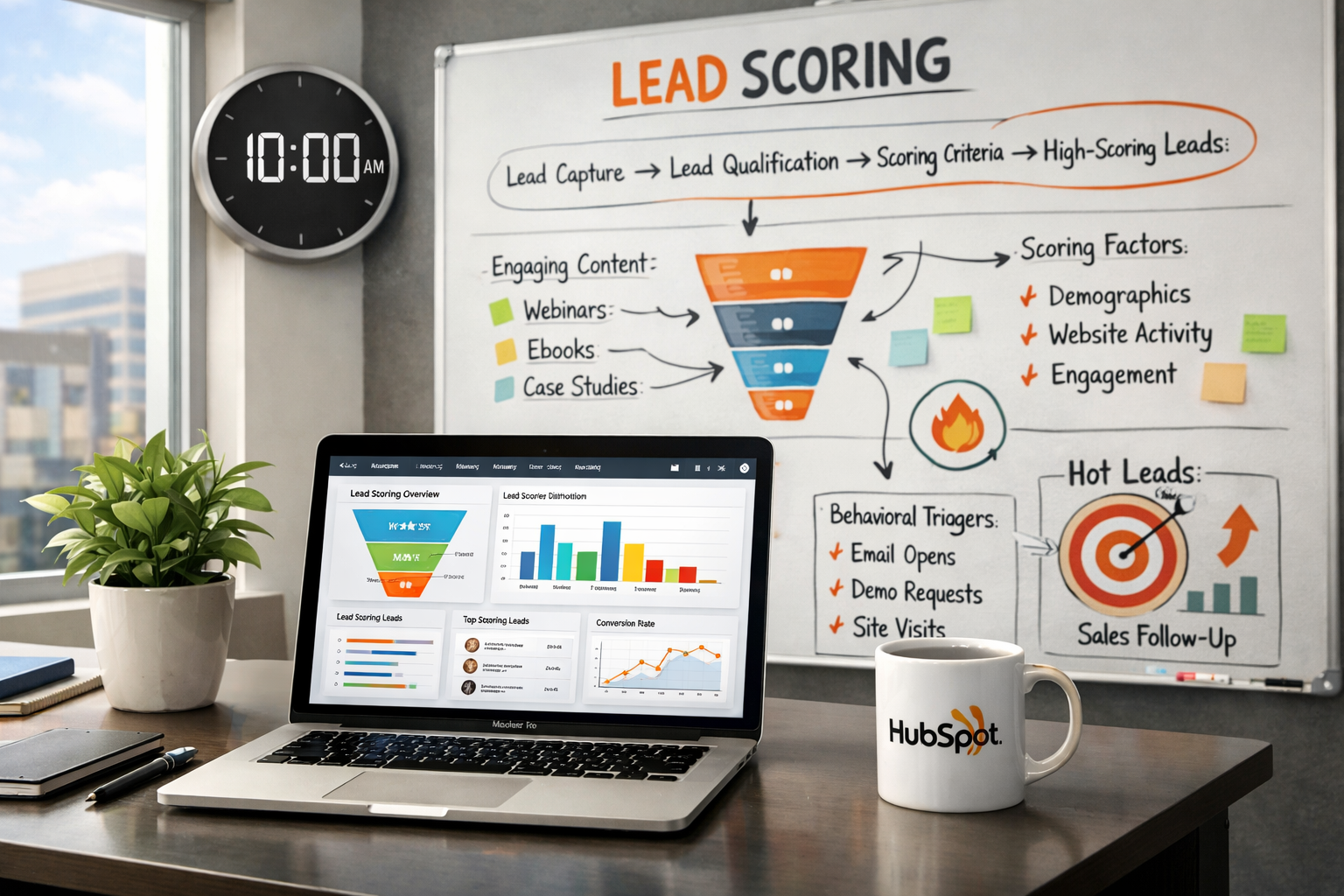
Better Conversions with HubSpot Lead Scoring

Better Conversions with HubSpot Lead Scoring

When it comes to converting prospects into customers, it’s not always as easy as giving them what they want at a lower price, especially when it...

Read More