1 min read
Your HubSpot CRM Already Has AI & Signal-Driven GTM Built In, You're Just Not Using It
If you’ve spent any time reading about AI in go-to-market (GTM) lately, you’ve probably seen the same themes come up over and over again. Automate...
3 min read
Jasper Meurs
April 8, 2026
If you spend enough time inside a CRM, you start to notice a pattern.
There’s always activity. Emails getting opened, pages being visited, deals moving a little, then not moving at all. New contacts appear, others disappear, and somewhere in the middle of all that, your pipeline is supposed to make sense.
But when you stop and ask:
“Who should we actually be focusing on right now?”
That’s where things usually get a bit vague.
I’ve seen this across a lot of teams. The data is there, but it’s not really being used in a meaningful way. So people default to what feels productive. Working through lists. Following up on whoever replied last. Prioritising based on gut feel.
And that’s usually where momentum starts to slip.
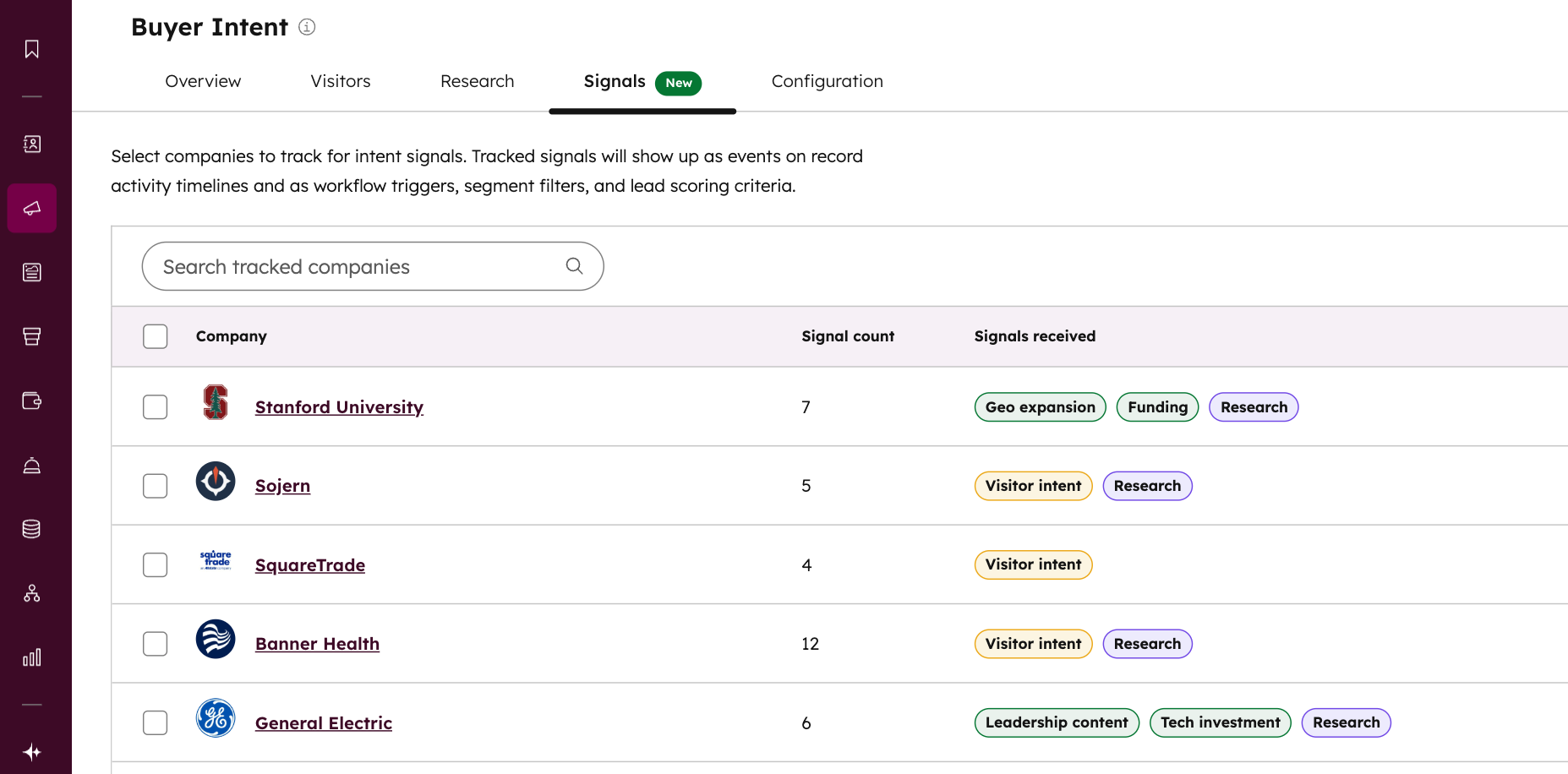
Signal-based selling is the practice of using real buyer behavior to guide your sales activity.
Not where someone should be in your funnel.
What they’re actually doing.
That includes things like:
These are all signals.
They’re small on their own, but together they paint a much clearer picture of intent than any static lead score ever will.
And the important part: most of these signals are already sitting inside your CRM.
The gap isn’t data. It’s what you do with it.
A lot of sales processes still rely on assumptions, even if we don’t call them that. This is also where a lot of teams run into issues with who they’re actually engaging.
None of these are wrong, but they’re incomplete. Because buying decisions don’t happen in a straight line, and they rarely involve just one person.
You’ve got decision makers, influencers, champions, blockers, all interacting at different points, often in ways that aren’t immediately visible
If you’re not looking at signals, you miss how that buying group is actually behaving.
And that’s when things start to feel off:
I’ve seen deals sit in pipelines for weeks, not because the product wasn’t right, but because nobody picked up on the fact that interest had already shifted elsewhere.
If your CRM doesn’t clearly define decision makers, influencers, or blockers, you end up reacting to activity without understanding the full picture. I broke this down in a recent piece Buying Roles for HubSpot Target Accounts Explained, especially around how different stakeholders impact the buying process in different ways.
The biggest shift with signal-based selling isn’t just better targeting, it’s how you decide where to focus.
Instead of asking:
“Who’s next on my list?”
You start asking:
“Who’s actually showing intent right now?”
That one change alone reshapes how a sales team operates. Because when you align outreach with real behavior:
You’re not forcing progress. You’re stepping into it.
This is the part that doesn’t get talked about enough.
Signals don’t just tell you with whom to engage. They create a window.
And those windows don’t stay open for long.
If someone is actively researching, comparing options, or re-engaging with your content, there’s a moment where they’re far more receptive to a conversation. Miss out on that moment, and you’re back to chasing them cold a week later.
The teams that perform well right now aren’t necessarily doing anything wildly different, they’re just quicker to notice what’s happening, and quicker to act on it.
That’s why modern go-to-market strategies are moving toward continuous feedback loops, where real customer behavior shapes what happens next, not just predefined campaigns.
And it’s also why GTM is starting to look less like a fixed process and more like a system you continuously adjust based on what you’re seeing
Speed, in this case, isn’t about working faster. It’s about responding at the right moment.
Because having signals and using them are two very different things.
Most CRMs already track:
But in a lot of cases:
So it gets ignored and teams fall back into habits that feel productive, but don’t actually move deals forward.
You don’t need to overhaul everything to start seeing value from this.
A simple place to begin:
Even that level of structure can make a noticeable difference.
Signal-based selling isn’t about adding more tools or more complexity, it’s about paying closer attention to what’s already happening.
If you’re looking at your pipeline and it feels a bit unpredictable, or you’re not sure whether your team is acting on the right signals, that’s usually a sign something’s missing in how your CRM is set up.
Happy to take a look with you. We can map out what signals actually matter for your business, how to surface them properly in HubSpot, and where your team can start acting on them without overcomplicating things.
1 min read
If you’ve spent any time reading about AI in go-to-market (GTM) lately, you’ve probably seen the same themes come up over and over again. Automate...
1 min read
When we think about how we interact with our audience, we often reach for a tool or a mechanism in order to do it. As much as we try, we can’t simply
1 min read
When it comes to converting prospects into customers, it’s not always as easy as giving them what they want at a lower price, especially when it...